What Is a Trauma Retreat? Somatic Healing, Benefits & What to Expect
Published: July 21, 2026
A trauma retreat for women is an immersive healing experience designed to support emotional healing, nervous system regulation, and reconnection with yourself through trauma-informed and somatic practices.
Many people begin searching for a trauma retreat after years of trying to heal.
They have gone to therapy. They have read the books. They understand their attachment patterns and childhood experiences. They have spent years becoming more self-aware.
And yet, something still feels stuck.
They may wonder:
- “Why do I understand my patterns but still repeat them?”
- “Why do I know where my wounds come from but still feel triggered?”
- “Why do I struggle to feel safe, connected, or fully myself?”
This is where a trauma healing retreat can offer a different kind of experience.
Rather than focusing only on understanding what happened in the past, a trauma retreat creates space to develop new experiences of safety, connection, and self-trust in the present.
What Is a Trauma Retreat?
A trauma retreat is a structured, immersive healing experience focused on supporting emotional healing, nervous system regulation, and deeper connection with yourself and others.
Unlike a traditional vacation or wellness retreat, a trauma healing retreat is intentionally designed around personal transformation.
Trauma retreats may include practices such as:
- Somatic therapy
- Trauma-informed movement
- Nervous system regulation practices
- Meditation and mindfulness
- Emotional processing
- Parts work
- Reflection and integration
- Supportive group experiences
A true trauma-informed retreat does not require someone to relive painful experiences or share more than they are ready to share.
Instead, the focus is on creating safety, choice, and awareness while supporting the body and nervous system in developing new patterns.
What Happens at a Trauma Retreat?
Every trauma retreat is different, but the most meaningful experiences often combine individual healing practices with supportive connection.
At a somatic trauma retreat with Orit Krug, participants explore healing through the body, nervous system, and relationships.
A retreat day may include:
- Body-based practices to increase awareness and connection
- Movement experiences to express emotions beyond words
- Guided nervous system regulation exercises
- Mindfulness and embodiment practices
- Group connection and relational healing
- Time for reflection, integration, and rest
The goal is not to force transformation.
The goal is to create an environment where deeper healing can naturally unfold.
Why Understanding Trauma Is Sometimes Not Enough
One of the most common experiences among people searching for a trauma retreat is:
“I understand why I am this way… but I still feel this way.”
Understanding your story can be incredibly powerful.
Learning about trauma, attachment, and your patterns can create compassion and clarity. But insight alone does not always change how you feel in your body, relationships, or everyday life.
Traumatic experiences can influence the nervous system, emotional responses, body sensations, and patterns of behavior long after an overwhelming experience has passed.
The National Child Traumatic Stress Network explains that trauma can impact emotional regulation, relationships, stress responses, and a person’s sense of safety.
This is why many people who have done years of healing work still feel like something is missing.
They may not need more information.
They may need a new experience.
A new experience of safety.
A new experience of connection.
A new experience of themselves.
Why Somatic Healing Matters in Trauma Recovery
A somatic trauma retreat incorporates body-based approaches to support healing, emotional regulation, and deeper self-awareness.
The word somatic means relating to the body.
A somatic approach recognizes that healing is not only about changing thoughts. It is also about developing awareness of the body, nervous system responses, emotions, and protective patterns.
Somatic practices may help participants explore:
- How their body responds to stress
- Where they hold tension or protection
- How emotions move through the body
- How to create more internal safety
- How to reconnect with themselves
Instead of only asking:
“Why am I like this?”
Somatic healing invites deeper questions:
“What is my body responding to?”
“What does safety feel like for me?”
“How can I create a different relationship with myself?”
Why Trauma Healing Happens in Relationship
One of the most important parts of trauma healing is often overlooked:
Healing does not happen only through understanding yourself. Healing also happens through experiencing yourself differently with others.
Humans are relational beings. Our nervous systems develop through connection, and supportive relationships play an important role in emotional regulation, resilience, and our ability to experience safety.
Research in attachment theory and interpersonal neurobiology has explored how relationships influence emotional regulation, connection, and our sense of self.
According to polyvagalinstitute.org, the nervous system includes pathways involved in social connection and communicating safety with others. While aspects of Polyvagal Theory continue to be explored and debated within the scientific community, the broader understanding that humans regulate through connection is supported across attachment and social neuroscience research.
This means trauma healing is not only about understanding what happened.
It is also about having new experiences where your nervous system learns:
- “I can be seen and still be safe.”
- “I can express myself and still belong.”
- “I can be connected without abandoning myself.”
The Missing Piece in Many Trauma Healing Experiences: Relational Healing
Many women who attend trauma retreats are not beginning their healing journey.
They have already done the work.
They understand their childhood experiences. They recognize their attachment patterns. They know their triggers.
And yet, relationships can still activate the deepest parts of them.
This makes sense because many emotional wounds develop in relationship — and they often need new relational experiences to heal.
For many women, healing attachment wounds means learning that they can be fully themselves and still experience connection, acceptance, and love.
You can learn more about this connection between trauma, attachment, and healing relationships in Orit Krug’s guide to attachment healing retreats for women.
This is one of the foundations of Orit Krug’s somatic trauma retreats.
Participants do not only practice individual nervous system regulation skills.
They experience healing within relationship.
Through carefully facilitated group experiences, participants can practice:
- Being fully seen, witnessed, and accepted without needing to perform, explain, or hide parts of themselves
- Expressing their emotions, needs, and authentic selves while remaining connected to others
- Receiving support and allowing themselves to be cared for without feeling like a burden
- Staying connected to themselves while building deeper, more secure connections with others
- Taking up space, trusting their voice, and allowing themselves to be fully expressed
- Experiencing genuine belonging and the felt sense of “I don’t have to change who I am to be loved”
The retreat environment itself becomes part of the healing process.
“I Thought I Was Too Much. Now I Know I’m Not.”
One of the most powerful parts of trauma healing is discovering that the parts of ourselves we learned to hide are often the very parts longing to be accepted.
Kirra came to retreat with a powerful intention: to stop hiding.
For much of her life, she had learned to mask — carefully editing her emotions, needs, and authentic expression because a part of her believed that being fully herself might be too much for others to handle.
She arrived committed to showing up differently.
Instead of shrinking, performing, or protecting, she practiced allowing herself to be fully present with all of herself — her joy, sadness, grief, vulnerability, and healing process.
And something profound happened.
She experienced what so many people with relational wounds long for:
When she allowed herself to be fully seen, she was not rejected.
She was met with acceptance.
She was met with compassion.
She was met with love.
Through being witnessed in her full expression, Kirra began to create a new understanding within herself:
She was not too much.
She was deeply lovable exactly as she was.
“I’ve believed my whole life that I’m too much, so I stayed small so people wouldn’t leave. On retreat, I showed up without masking, and was met with real acceptance. That alone changed something in me. Loving me isn’t as hard as I thought.”
— Kirra
What Makes Orit Krug’s Somatic Trauma Retreats Different?
The word somatic has become increasingly common in the wellness and healing world. But true somatic healing is much more than adding a few body awareness exercises to a retreat.
A deeply somatic approach involves understanding the relationship between the body, emotions, movement, nervous system responses, and lived experiences.
Orit Krug’s somatic trauma retreats are rooted in her professional training as a Board-Certified Dance/Movement Therapist (BC-DMT) and Licensed Creative Arts Therapist (LCAT), along with more than 15 years of experience supporting emotional healing through the body.
Dance/movement therapy is a clinical therapy approach that recognizes movement and the body as important pathways for emotional expression, communication, and healing.
For Orit, somatic healing is not simply:
“Notice your body.”
It is learning how to listen to your body.
It is learning how to recognize protective patterns.
It is learning how to create new experiences of safety, connection, and self-trust.
Through movement, nervous system regulation practices, mindfulness, emotional processing, and relational healing, participants are supported in moving from:
“I understand my patterns.”
to:
“I can experience myself differently.”
How to Choose the Right Trauma Retreat
Not all trauma retreats are created the same.
If you are considering attending a trauma healing retreat, it is important to look beyond the location or promises of transformation and understand the approach, training, and experience behind the retreat.
Is the retreat trauma-informed?
A trauma-informed retreat should prioritize emotional safety, consent, choice, and respect for each participant’s individual healing process.
Healing should never require someone to push beyond their own boundaries or share more than they feel ready to share.
Does the retreat offer genuine somatic healing?
The word somatic has become increasingly popular, so it is important to understand what a retreat actually means by somatic work.
A deeply somatic approach goes beyond simply adding relaxation exercises or asking participants to notice sensations.
True somatic healing involves understanding the connection between the body, nervous system, emotions, movement, and lived experiences.
When choosing a somatic trauma retreat, consider the facilitator’s training and whether their approach is rooted in meaningful study and experience with body-based healing.
Does the retreat include relational healing?
Because so many wounds develop within relationships, many people benefit from healing experiences that allow them to practice connection, authenticity, and vulnerability in a safe environment.
A powerful trauma retreat is not only about what you learn about yourself.
It is also about what you experience with others.
Does the facilitator have specialized training?
Consider the facilitator’s education, professional background, and experience supporting trauma healing.
Orit Krug’s approach is rooted in her training as a Board-Certified Dance/Movement Therapist (BC-DMT) and Licensed Creative Arts Therapist (LCAT), combining movement therapy, nervous system regulation, mindfulness, and embodiment practices to support deeper healing.
Explore Orit Krug’s Somatic Trauma Retreats for Women
If you feel like you have done the inner work but still feel something is unresolved, an immersive somatic trauma retreat may offer the deeper experience you have been looking for.
Orit Krug’s retreats combine:
- Somatic therapy
- Trauma-informed movement
- Nervous system regulation
- Relational healing
- Mindfulness and embodiment practices
- Supportive community connection
These experiences are designed for women who are ready to move beyond simply understanding their patterns and begin creating lasting change through the body.
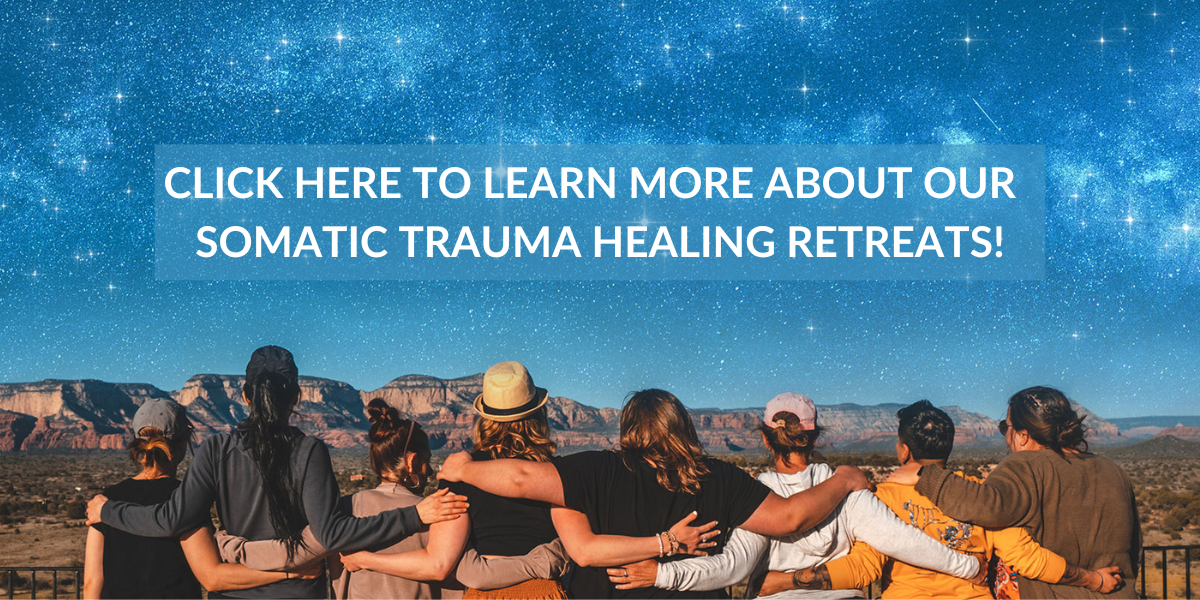
Explore upcoming somatic retreats for women →
Your healing journey is not about becoming someone new.
It is about reconnecting with the parts of yourself that have always been there beneath the protective patterns, survival strategies, and experiences that shaped you.
Frequently Asked Questions About Trauma Retreats
What is the purpose of a trauma retreat?
The purpose of a trauma retreat is to provide an immersive, supportive environment where participants can explore healing through trauma-informed practices such as somatic therapy, nervous system regulation, emotional processing, reflection, and connection.
Is a trauma retreat the same as therapy?
A trauma retreat is not a replacement for individual psychotherapy or mental health treatment.
Instead, it can complement therapy by offering dedicated time for embodiment, self-exploration, nervous system support, and relational healing.
Can trauma be healed through somatic therapy?
Trauma-informed somatic approaches recognize that overwhelming experiences can influence the nervous system, emotions, body sensations, and patterns of responding.
Somatic therapy supports healing by helping individuals develop greater awareness, regulation skills, self-trust, and connection with themselves.
Why are relationships important in trauma healing?
Humans are wired for connection. Supportive relationships can provide experiences of safety, belonging, and emotional regulation that help people develop new ways of relating to themselves and others.
What makes a women’s trauma retreat different?
A women’s trauma retreat can provide a unique opportunity to explore healing within a supportive community while practicing authenticity, vulnerability, boundaries, and connection.
For many women, the healing experience comes from discovering that they do not have to shrink, perform, or hide parts of themselves in order to belong.
