What Is a Spiritual Healing Retreat? What to Expect and Who It’s For
Published August 4, 2026
You can meditate every morning.
You can journal, read spiritual books, go to therapy, practice mindfulness, and spend years trying to understand yourself.
And still reach a point where you think:
Why do I understand so much about myself and still feel stuck?
Sometimes the problem isn't that you need more information.
You've already done the thinking, explored your patterns, and spent time looking inward.
What may be missing is an experience that helps you embody what you've learned—not just understand it intellectually.
That's where a spiritual healing retreat can offer something different.
A spiritual healing retreat creates intentional space to step away from everyday responsibilities and explore healing through practices that engage your mind, body, emotions, and sense of meaning.
It isn't simply a vacation.
It isn't necessarily a meditation retreat.
And it isn't about escaping your life.
At its best, a spiritual healing retreat gives you enough space, support, and embodied experience to connect with yourself in a deeper way—and potentially return to your everyday life with something genuinely different.
What Is a Spiritual Healing Retreat?
A spiritual healing retreat is an immersive experience designed to support personal growth, emotional healing, self-connection, and spiritual exploration.
The exact experience varies widely depending on the retreat.
Some may focus heavily on meditation or contemplative practices.
Others may incorporate movement, breathwork, embodiment, nature, creative expression, ritual, emotional processing, or trauma-informed approaches.
A retreat may include:
- Meditation and mindfulness
- Somatic and embodiment practices
- Trauma-informed healing
- Movement
- Breathwork
- Journaling and reflection
- Creative expression
- Nature-based experiences
- Group connection
- Emotional processing
- Spiritual exploration
- Integration practices
The important distinction is that a healing retreat isn't simply about adding more practices to your routine.
It's about creating enough space to experience yourself differently.
Why Leave Your Normal Environment to Heal?
There is something powerful about stepping outside your normal routines.
At home, your attention is constantly being pulled in different directions.
Work needs your attention.
Your phone is nearby.
Your responsibilities don't disappear.
You may have people around you who know you in very specific roles.
Even when you're intentionally trying to heal, your everyday environment can reinforce the same patterns you're trying to change.
A retreat temporarily interrupts that cycle.
You have fewer distractions and more time to reflect.
You are surrounded by people who are also intentionally exploring themselves.
You have the opportunity to spend time with yourself without immediately returning to the demands of ordinary life.
That doesn't automatically create transformation, but it can create the conditions for it.
A Spiritual Retreat Is More Than a Break From Your Routine
It's easy to think of a retreat as simply getting away.
And yes, getting away can feel amazing.
But a true healing retreat isn't just a nicer vacation.
The intention is different.
Instead of filling your days with sightseeing, entertainment, or relaxation, you are intentionally creating space for something deeper.
You might spend time moving your body, notice emotions you've been too busy to feel, and have conversations that wouldn't happen in your normal environment.
You might discover that something you've been trying to understand intellectually feels completely different when you actually experience it.
That last piece is crucial.
Healing isn't always something you can think your way into.
Sometimes your body needs an opportunity to experience something new.
Why Embodiment Matters in Spiritual Healing
This is one of the biggest differences between simply learning about healing and actually experiencing it.
You can understand your trauma, your attachment style, and your nervous system.
You can understand why you react the way you do.
And then something happens—and your body reacts before your mind can catch up.
You freeze, shut down, become overwhelmed, and feel anxious.
You become disconnected from yourself.
You know intellectually that you're safe, but you don't necessarily feel safe.
This is why embodied practices can be such an important part of spiritual healing.
Instead of only talking about what you're experiencing, you have opportunities to experience yourself through movement, sensation, emotion, breath, connection, and presence.
You aren't simply asking:
“What do I understand about myself?”
You're discovering:
“What can I actually experience differently?”
That distinction can be enormous.
You Don't Have to Be Spiritual to Attend a Spiritual Healing Retreat
The word spiritual means different things to different people.
For some people, spirituality involves a connection with God or a higher power.
For others, it means feeling connected to nature.
For someone else, it may simply mean exploring questions of meaning, purpose, identity, consciousness, or connection.
You don't need to subscribe to a particular religion or spiritual belief system to benefit from a retreat described as spiritual.
What matters more is your willingness to explore yourself beyond your usual intellectual framework.
You don't have to believe in anything you don't believe in.
You don't have to participate in practices that don't resonate with you.
A well-designed retreat should leave room for individual experience rather than requiring everyone to have the same spiritual interpretation.
Who Is a Spiritual Healing Retreat For?
A spiritual healing retreat may be a good fit if you've reached a point where you want more than another book, podcast, therapy session, or weekend away.
You might be someone who:
- Has done years of therapy or personal growth work but still feels stuck
- Understands your patterns but struggles to change them
- Feels disconnected from your body or emotions
- Wants deeper self-connection
- Feels burned out by the pace of everyday life
- Is moving through a major life transition
- Wants time away from responsibilities to reflect
- Feels called toward deeper spiritual exploration
- Wants an immersive experience rather than another weekly appointment
- Is ready to experience healing rather than simply learn about it
You don't need to be in crisis.
In fact, many people come to retreats because something in their life is already working—but they know there is another level of depth they want to explore.
What Happens During a Spiritual Healing Retreat?
Every retreat is different, but most immersive healing retreats create some combination of structured practice and unstructured space.
A typical day might include:
Morning Practices
The day may begin with meditation, movement, breathwork, mindfulness, or another grounding practice.
The purpose isn't necessarily to make you calm.
It may simply help you become more present and connected to yourself before the day begins.
Experiential Healing Sessions
Rather than spending the entire retreat sitting in a circle talking, you may participate in experiential practices.
These could involve movement, embodiment, creative expression, reflection, emotional processing, or relational exercises.
The goal is to create experiences that allow you to explore yourself in a different way.
Time in Nature
Many spiritual retreats take place in nature intentionally.
Nature can provide space, quiet, sensory stimulation, and a break from the constant demands of technology and everyday environments.
You may hike, walk, sit outside, or simply spend time noticing your surroundings.
Group Connection
The most profound healing often happens in relational and group settings.
Being around other people who are intentionally exploring themselves can create a sense of connection and belonging.
You may share experiences, witness other people's vulnerability, laugh together, or simply discover that you're not the only person struggling with something you've carried privately.
Reflection and Integration
A meaningful retreat should also include time to process what you're experiencing.
Real integration doesn’t happen just by thinking about it or talking it through. It happens through embodiment—by letting what you’ve experienced land in your nervous system, your breath, your posture, and your felt sense of being.
You don't want to leave with a huge emotional experience and no idea how to bring any of it into your actual life.
Integration is the process of letting your body catch up to your insights, so the retreat doesn’t stay as a memory or an idea, but becomes something you can actually live.
What Does Spiritual Healing Actually Feel Like?
There isn't one universal experience.
For one person, healing might feel like relief.
For another, it might feel like grief.
Someone else might experience anger, joy, vulnerability, clarity, or simply a sense of being more connected to themselves.
Healing doesn't feel particularly dramatic.
You might notice that you can finally relax and laugh more freely.
You might cry without feeling ashamed.
You might realize you've been holding your body in a certain way for years.
You might experience yourself taking up more space.
You might discover that receiving support feels different than it used to.
These experiences are profound even when they don't look like a dramatic breakthrough.
Dana's Experience: Discovering Strength Through Receiving Support
One of the reasons I believe immersive retreats can be so powerful is that healing doesn't always happen through insight.
Sometimes it happens when you experience yourself differently in relationship with other people.
Dana described her experience after one of our retreats:
“I went through rehab 35 years ago. That's was when I was totally lost. Our retreat made me realize how strong I am now & accepting of more help even at 64 years old. Totally releasing my emotions at various times & especially at our departure session...I have never cried in front of 30 people and felt more love.”
What stands out to me is that Dana wasn't simply describing something she learned.
She was describing an experience of herself.
She experienced her own strength.
She experienced being able to receive help.
She allowed herself to release emotions.
And she experienced vulnerability in front of a group without feeling alone or unsafe.
That is part of what embodied healing can make possible.
You aren't simply learning that you're allowed to receive support.
You get to experience what receiving support actually feels like.
A Spiritual Retreat Isn't About Forcing a Breakthrough
There's a strange amount of pressure around transformational experiences.
People sometimes arrive expecting to have a huge emotional release, discover their life's purpose, heal their trauma, or completely reinvent themselves in a few days.
That pressure can actually get in the way.
Healing doesn't happen on command.
You don't need to force an emotional breakthrough.
You don't need to cry or have a profound spiritual experience.
You don't need to come home feeling like an entirely different person.
Sometimes the most meaningful shift is subtle.
You notice something you couldn't see before.
You respond differently.
You feel more connected to your body.
You become more comfortable receiving support.
You realize you have more capacity than you thought.
Or you simply leave knowing yourself a little more deeply.
What Makes a Spiritual Healing Retreat Transformative?
A retreat is not just a collection of techniques—it is a held experience.
The quality of that holding often determines whether something meaningful actually lands, or whether participants simply move through exercises without real integration.
A skilled facilitator is responsible for far more than guiding sessions. They are tracking group dynamics, attuning to emotional safety, recognizing when to gently challenge and when to slow everything down, and creating the kind of environment where people can actually meet themselves without feeling overwhelmed or exposed.
As a Board-Certified Dance/Movement Therapist and Licensed Creative Arts Therapist for over 15 years, I’ve seen again and again how the same practice can lead to entirely different outcomes depending on how supported, safe, and seen someone feels in the process. The container changes everything.
This is why experience, training, and presence are not optional details—they are the foundation. Not because the facilitator becomes the focus, but because their capacity directly shapes the depth, safety, and integrity of the work that becomes possible for everyone in the room.
Another important question is whether the retreat gives you opportunities to experience something new.
A retreat can give you hours of meditation and beautiful scenery and still not create meaningful change.
Transformation is more likely when the experience includes:
Safety
You need enough psychological and physical safety to explore honestly.
Safety in this context doesn’t mean being completely comfortable all the time—it means your nervous system isn’t in a constant state of threat, and you’re not being pushed beyond your capacity without support.
It includes feeling respected in your boundaries, having clear consent around practices, and knowing you can pause, step back, or opt out at any time without judgment.
When safety is present, your system can soften enough for deeper emotions, memories, and insights to surface naturally rather than defensively.
Choice
You should be able to make decisions about your participation rather than being pressured into practices that don't feel right for you.
A well-facilitated retreat recognizes that true healing cannot be forced, and that consent is an ongoing process, not a one-time agreement.
You may be invited to explore certain practices, but you should always have the freedom to opt out, modify, or move at your own pace.
This sense of agency is essential—it allows you to stay connected to yourself rather than overriding your inner signals in the name of “growth.”
Embodiment
Healing doesn’t happen only through conversation or intellectual understanding—it requires lived, embodied experience.
Insight alone rarely creates lasting change. You can understand your patterns clearly and still find yourself repeating them when life activates you. That’s because the body often holds what the mind has already explained.
When we bring the body into the process—through breath, movement, sensation, and present-moment awareness—something shifts. Experience becomes more than conceptual. It becomes something you can feel, track, and integrate in real time.
This is where deeper healing begins: not in thinking differently about yourself, but in experiencing yourself differently.
Connection
Being witnessed and supported by others can create experiences that are difficult to access alone.
There is something profoundly regulating about having another person—or a group of people—stay present with you while you move through emotion, uncertainty, or vulnerability without trying to fix, interrupt, or pull you out of it.
In those moments, the nervous system begins to learn something new: that it is possible to be seen in your fullness and still remain safe, still remain connected, still remain held.
This kind of relational presence can gently soften long-held patterns of self-protection and isolation, allowing feelings that were once too overwhelming to experience alone to finally move, shift, and integrate in the presence of others.
Integration
You need opportunities to connect what happens during the retreat with how you actually live afterward.
Integration is where insight becomes lived experience—where what you’ve felt, released, or discovered doesn’t stay contained within the retreat environment, but begins to take shape in your everyday choices, reactions, and relationships.
Without this bridge, even powerful moments of clarity can fade once you return to familiar routines and old patterns of stress, distraction, or responsibility.
True integration often happens slowly. It might look like noticing a familiar trigger and responding with a little more space than you had before.
It might be remembering a feeling of groundedness from the retreat and consciously returning to it in a difficult moment.
It can also mean giving yourself permission to move differently in the world—speaking more honestly, resting when you need to, or allowing emotions to move through instead of holding them in.
The retreat opens the door, but integration is what helps you actually walk through it in your real life.
What If You've Already Done a Lot of Healing Work?
This is one of the most common reasons people come to my retreats.
They've done the therapy.
They've read the books.
They understand their attachment patterns.
They've meditated for years.
They've journaled.
They know their triggers.
And yet they still feel stuck.
That doesn't necessarily mean you've failed.
It may simply mean that you've reached the limits of intellectual understanding.
You can know exactly why you shut down and still shut down.
You can know why you're anxious and still feel anxious.
You can understand your trauma and still become triggered.
You can know you're worthy and still struggle to feel worthy.
At some point, the question becomes less about what else can I understand?
And more about:
What can I experience?
That's where an embodied retreat can offer something different.
Spiritual Healing Retreat vs. Meditation Retreat
These terms are sometimes used interchangeably, but they don't necessarily describe the same experience.
A meditation retreat typically places meditation at the center of the experience.
A spiritual healing retreat may include meditation but can encompass a much broader range of practices.
The emphasis may be on emotional healing, embodiment, self-exploration, connection, spirituality, and integration.
If you're primarily looking to deepen a meditation practice, a meditation retreat may be the better fit.
If you're looking for a broader transformational experience that incorporates your emotional and relational life, a spiritual healing retreat may be more appropriate.
Spiritual Healing Retreat vs. Wellness Retreat
Wellness retreats often focus on rest, healthy food, fitness, spa treatments, movement, or general well-being.
Those experiences can be wonderful.
But a spiritual healing retreat tends to go deeper into your internal experience.
Rather than simply helping you feel refreshed, the intention may be to explore patterns, emotions, relationships, identity, meaning, and deeper self-connection.
The two can overlap.
But they aren't necessarily the same thing.
How to Choose a Spiritual Healing Retreat
If you're considering a retreat, don't choose based solely on the location or how beautiful the photos are.
Look at the actual approach.
Ask:
- Who is facilitating the retreat?
- What training and experience do they have?
- Is the retreat trauma-informed?
- How much of the experience is structured?
- Is there time for rest and integration?
- Are practices optional or mandatory?
- How does the retreat handle emotional activation?
- Is there support available if someone becomes overwhelmed?
- Does the retreat include embodied or experiential practices?
- What happens after the retreat?
You should also pay attention to how the retreat is marketed.
Be cautious of anyone promising that a few days will completely heal your trauma, permanently eliminate anxiety, or transform your entire life.
Real healing is rarely that simple.
Experience Spiritual Healing Through the Body
This is ultimately what I believe makes immersive healing different.
You can spend years learning about yourself—understanding your patterns, analyzing your relationships, meditating, and reading every book you can find.
And all of that can be valuable.
But healing becomes different when your body gets to participate.
When you experience yourself staying present with an emotion instead of immediately suppressing it.
When you allow yourself to receive support instead of automatically handling everything alone.
When you move through vulnerability without disappearing.
When you feel grief without needing to explain it.
When you experience connection without performing who you think you should be.
When your body gets new experiences of safety, choice, connection, and possibility.
You aren't just learning about healing. You're experiencing yourself as someone capable of healing.
Experience a Different Kind of Healing
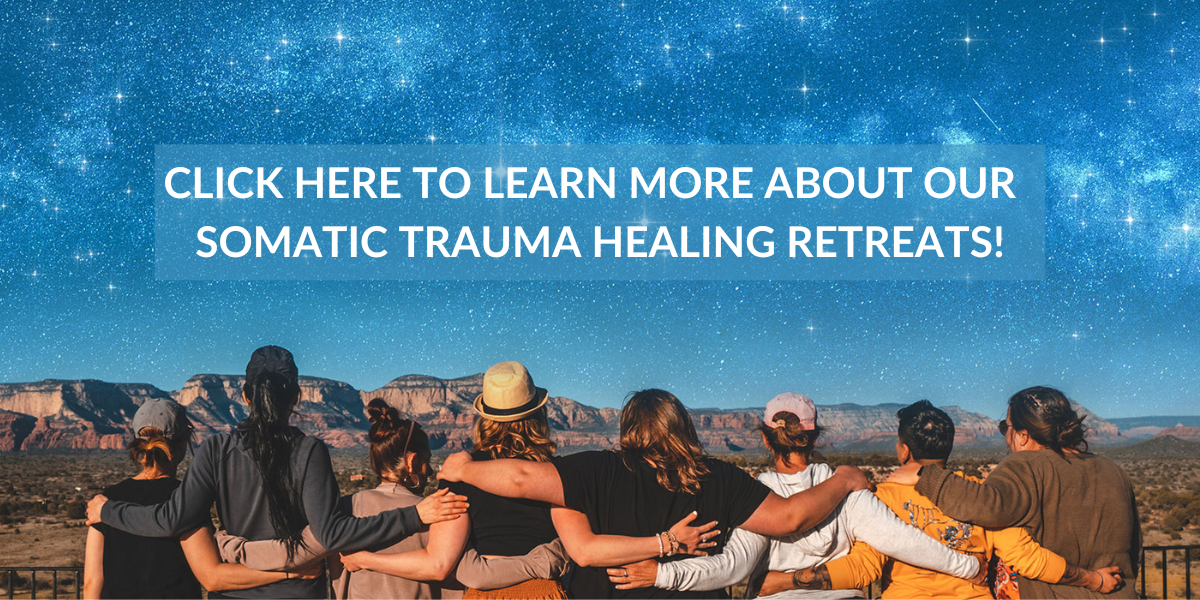
This is the work I explore through my somatic and spiritual healing retreats.
These immersive experiences are designed for people who are ready to move beyond simply thinking about their patterns and begin experiencing themselves differently through their bodies, emotions, relationships, and connection with the world around them.
You don't have to arrive perfectly secure.
You don't have to have everything figured out.
You don't have to force a breakthrough.
You simply have to be willing to meet yourself where you are.
Because sometimes the next stage of healing isn't learning something else about yourself.
It's finally giving your body the opportunity to experience what your mind has been trying to understand all along.
Visit our somatic retreats page to explore upcoming retreats and see if this experience feels aligned for your next step in healing and self-discovery.