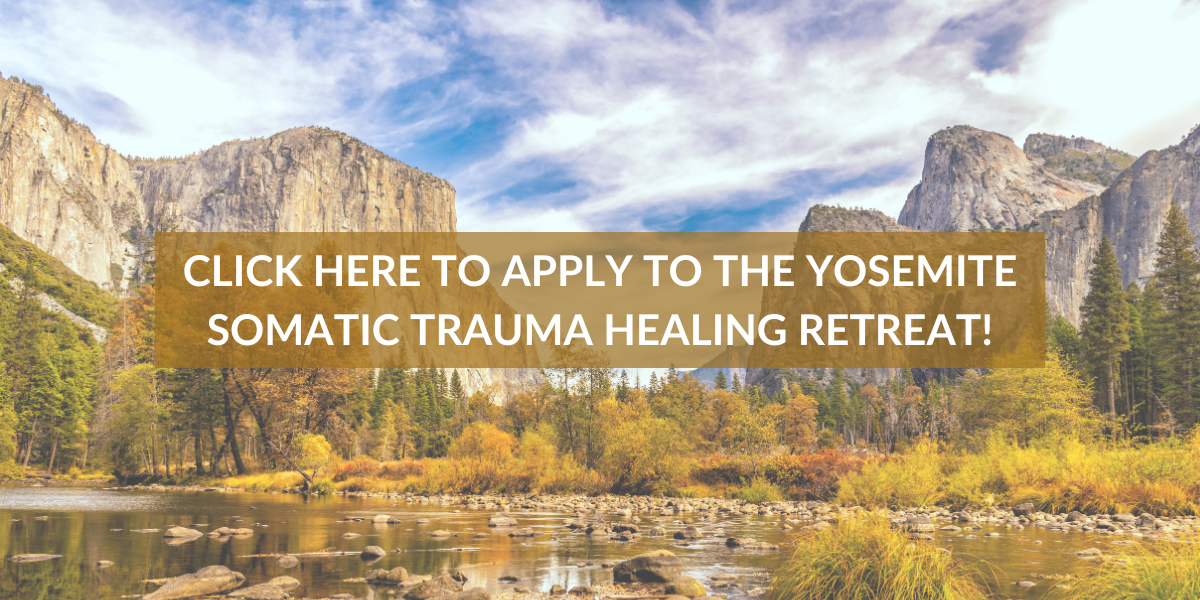
A Day at the Yosemite Somatic Therapy Retreat
What a Day Feels Like at a Somatic Trauma Healing Retreat
Many people wonder what actually happens during a somatic trauma healing retreat in Yosemite. Unlike traditional retreats that focus on constant activities or packed schedules, this retreat is intentionally designed to support your nervous system. The structure allows space for reflection, deep therapeutic work, and integration.
Instead of rushing from session to session, the rhythm of the retreat invites you to slow down and reconnect with your body, your emotions, and your inner experience.
Throughout the day, the mountains, forests, and open landscapes of Yosemite naturally support this process. Nature provides a powerful backdrop for healing, allowing your nervous system to settle and your awareness to expand.
Below is a look at how a typical day at the retreat unfolds.
Morning — Arriving Into the Day
Mornings begin gently. You wake up in the quiet stillness of the Sierra Nevada foothills, surrounded by mountain air and the subtle sounds of nature. Instead of jumping immediately into structured activities, the morning is intentionally spacious.
Breakfast is slow and nourishing. There is no pressure to perform, reflect, or process anything immediately. This time allows your nervous system to settle naturally.
Many women find that simply being in this environment begins to shift how their body feels. When the nervous system slows down, deeper emotional awareness often becomes more accessible.
You may spend the morning:
- enjoying breakfast with other women at the retreat
- sitting quietly with coffee or tea
- taking a gentle walk outside
- noticing sensations in your body
- allowing thoughts and emotions to arise naturally
This slower beginning helps create the foundation for the deeper therapeutic work that takes place later in the day.
Midday — Somatic Therapy in Nature
One of the unique aspects of this Yosemite somatic therapy retreat is the integration of nature with body-based trauma healing. During the day, you'll explore Yosemite through a somatic-based hike.
This is not a strenuous hike or performance-focused outdoor activities. Instead, it is an intentional experience designed to support nervous system regulation and embodied awareness in nature.
Nature plays an important role in trauma healing. Research in psychology and neuroscience suggests that time in natural environments can support emotional regulation, stress reduction, and improved mental well-being. (American Psychological Association)
During these experiences you may:
- walk slowly through forest trails
- pause to notice your breath and physical sensations
- connect with the natural environment around you
- observe emotional responses as they arise
The goal is not exercise or achievement. It is reconnection. Many people who experience trauma become disconnected from their bodies. Somatic practices help restore that connection in a safe and supportive way.
Afternoon — Deep Somatic Therapy
The afternoon is where the deeper therapeutic work of the retreat begins. Somatic therapy focuses on how trauma lives in the body and nervous system. Rather than only talking about past experiences, this work invites you to notice what is happening inside your body in the present moment.
You may begin to sense emotions, memories, or protective responses that have been quietly living beneath the surface. Often these are parts of yourself that learned long ago how to protect you. When these parts are gently accessed in a safe environment, something powerful happens.
Instead of pushing them away or analyzing them, you are guided to slow down and be with them. Through careful guidance, you begin to move with what your body is expressing. Small movements, shifts in posture, breath, or gesture often emerge naturally.
Many women describe this moment as feeling like a long exhale or a deep sigh of relief moving through their body. The body begins to release tension that may have been held for years. As you stay present with these experiences, something deeper often unfolds:
- a sense of space where there once felt like inner pressure
- compassion toward parts of yourself that were struggling
- the feeling of welcoming these parts back into wholeness
Rather than fighting against your inner experience, you learn how to move with it safely. This process also allows your nervous system to explore new ways of moving and holding your body. Many trauma responses create patterns of contraction, protection, or restriction in the body. As these patterns soften, the body naturally begins to experiment with expanded movement, breath, and posture. Over time this creates a powerful shift.
Instead of feeling trapped in old responses, you begin to experience a sense of freedom and flexibility in how you move through the world. For many people, this is the feeling they have been searching for during years of healing work: a sense of wholeness, acceptance, and ease within themselves.
Hope, from the Sedona Retreat, Sep ’24, said:“The retreat guided me through a healing emotional journey—from fear and anxiety, to grief and release, and finally to confidence and playfulness. I felt deeply supported and safe to fully feel.”
“Since then, I’ve noticed more ease and confidence in being myself, especially in relationships. My higher self is leading more often, and all parts of me trust that I’m my own primary caregiver. This shift has brought real relief.”
“My favorite part was the Somatic Dance Therapy sessions – I felt exposed yet safe, spontaneous, open, joyful, and fully alive. The mirroring practice and parts work especially helped me connect more deeply with myself and others in ways that felt transformative.”
Evening — Integration and Reflection
Evenings are designed for integration. After a full day of experiences, the nervous system needs time to settle and process what has occurred. Dinner is a time for nourishment and gentle conversation.
Following dinner, the evening is intentionally open. You might spend this time:
- journaling about insights from the day
- sitting quietly outside under the stars
- connecting with another retreat participant
- resting and allowing your body to relax
This slower evening pace allows the body to integrate the emotional and physical experiences from earlier in the day. Integration is a crucial part of trauma healing.
Without time for reflection and rest, deep therapeutic work can become overwhelming. The retreat structure ensures that your nervous system has the support it needs to process and absorb the work you are doing.
Group Connection and Shared Experience
Another important aspect of a trauma healing retreat for women is the experience of being in a supportive group. Trauma can often create feelings of isolation or disconnection. Experiencing healing in the presence of others can help restore a sense of safety in relationships.
During the retreat, you share space with women who are also exploring their own healing journeys. Conversations may happen naturally during meals, walks, or quiet moments together. These connections often become one of the most meaningful parts of the retreat experience.
Many women describe feeling:
- deeply understood by others
- less alone in their experiences
- supported in ways they had not previously experienced
The goal is not to force vulnerability or group sharing, but to create an environment where connection can emerge naturally.
“I experienced powerful breakthroughs—moments where I dropped my guard and connected deeply with the women around me.”
“I realized we all have inner protectors and barriers, but beneath them, we all crave authentic expression and connection without fear or judgment.”
“This helped me break free from years of social anxiety & isolation.”
“I also felt safe honoring my need for alone time, which reminded me that I’m not trapped. This was a key part of healing old trauma.”
“Since returning home, I’ve felt more open to social interaction and have been actively choosing connection.”
– Patti, Redwood Retreat, Jul ’24
After the Retreat: Continuing Integration
The impact of a somatic trauma healing retreat often continues long after the retreat itself ends. Because the work focuses on the nervous system and embodied experience, many people notice shifts that continue to unfold over time.
You may find that after the retreat:
- you feel more connected to your body
- emotional responses become easier to understand
- relationships begin to feel different
- you experience greater self-compassion
Healing is rarely a single moment of transformation. Instead, it is a gradual process of reconnecting with parts of yourself that may have been overlooked or protected. The retreat provides a space where this process can begin or deepen in a supportive environment.
Is a Somatic Therapy Retreat Right for You?
People often seek out a somatic therapy retreat when traditional approaches to healing have not fully addressed what they are experiencing. You may feel drawn to this type of retreat if:
- you have done therapy but still feel stuck in certain patterns
- you notice strong physical reactions during stress or conflict
- you want to reconnect with your body and emotions
- you are seeking deeper healing in a supportive environment
- you want to combine therapy with time in nature
A retreat provides dedicated time and space to focus on your healing without the distractions of everyday life. For many women, this immersive experience allows breakthroughs that would be difficult to access in a weekly therapy setting.
Join the Yosemite Somatic Trauma Healing Retreat
If you feel called to explore healing through body-based therapy in nature, this retreat offers a supportive and intentional space to begin.
We carefully consider each application to ensure the retreat is the right fit for you, the group dynamic supports your process, and you feel safe engaging with the somatic work.
Participants are women committed to their own growth, creating a safe, gentle container where you can explore, feel, and transform.
When you join, you’ll have access to guided somatic therapy, nature-based practices, and loosely structured integration time. You’ll also receive resources to continue your growth at home and follow-up guidance to integrate the shifts you experience.
The retreat offers space for reflection, movement, and connection — everything your nervous system needs to process and embody the work deeply.
Spaces are limited to maintain safety and support. Apply here to be considered for the next retreat, and take the first step toward reconnecting with your body, your emotions, and your authentic self.