How to Find a Trauma-Informed Spiritual Retreat
Published July 28, 2026
A spiritual retreat can be a powerful experience—but if you have trauma, choosing the right one matters.
Many people begin a spiritual journey because they are searching for something deeper.
They meditate.
They practice gratitude.
They journal.
They explore mindfulness, self-development, and personal growth.
And yet, they may still find themselves feeling anxious, disconnected, overwhelmed, or stuck.
They may wonder:
“Why do I still feel this way if I’ve done so much inner work?”
“Why do I still get triggered if I understand myself so deeply?”
“Why hasn’t meditation completely healed my anxiety?”
These are important questions.
Because spiritual growth and trauma healing are not always the same process.
A spiritual practice can create profound awareness and connection. But for many people, lasting transformation also requires learning how to feel safe, connected, and present within the body.
This is why finding a trauma-informed spiritual retreat matters.
What Is a Trauma-Informed Spiritual Retreat?
A trauma-informed spiritual retreat is an immersive experience that combines spiritual exploration with an understanding of trauma, nervous system regulation, emotional safety, and embodiment.
Rather than encouraging you to transcend difficult emotions or simply “think positive,” a trauma-informed retreat recognizes that every part of you has a reason for existing.
Your anxiety.
Your fear.
Your protective patterns.
Your emotional reactions.
These are not signs that you are failing spiritually.
They are often parts of you that learned how to protect you.
A trauma-informed spiritual retreat creates space to meet those parts with curiosity, compassion, and care.
Why Meditation and Spiritual Practices Aren’t Always Enough
Meditation can be incredibly valuable.
Research suggests mindfulness and meditation may help reduce trauma-related symptoms, including PTSD, while also noting that more research is needed to understand how these approaches work best.
But many people discover that sitting quietly with their thoughts is not always enough to shift deeply rooted patterns.
Why?
Because trauma is not only a thought.
It can also live in the body.
You may understand:
“I am safe.”
But your body may still feel:
“I need to protect myself.”
You may know:
“I am worthy.”
But another part of you may still fear rejection.
You may believe:
“I can trust myself.”
But your nervous system may still expect danger.
This is why some people find themselves asking:
“Why am I still anxious after meditation?”
The answer may not be that you need to meditate harder.
You may need a different kind of experience—one that allows your body to participate in the healing process.
Related: Why Meditation Isn’t Always Enough to Heal Trauma
What Makes a Spiritual Retreat Trauma-Informed?
Not all spiritual retreats are created with emotional safety in mind.
When choosing a retreat, consider:
Does the retreat honor your nervous system?
A trauma-informed retreat should not pressure participants to share, disclose, or access emotions before they are ready.
Healing requires choice.
A safe environment allows you to participate while staying connected to your own boundaries.
Does the retreat include embodiment?
Many spiritual practices focus primarily on the mind.
But lasting change often happens when insights become embodied.
Look for retreats that include practices such as:
- Somatic movement
- Body awareness
- Meditation
- Nervous system regulation
- Embodied reflection
- Mindful connection
Because transformation is not just about what you understand.
It is about what you experience.
Related: Why Do I Understand My Trauma But Still Get Triggered?
Are difficult emotions welcomed?
A trauma-informed spiritual retreat does not promise that you will become endlessly peaceful or never feel anxiety again.
That can actually become another form of spiritual bypassing.
True healing is not about eliminating the parts of yourself that feel afraid.
It is about developing a more loving relationship with them.
Related: Spiritual Bypassing: When Spirituality Becomes a Way to Avoid Healing Trauma
How a Trauma-Informed Spiritual Retreat Supports Deeper Healing
Many people approach spirituality hoping to become someone different.
More peaceful.
More evolved.
More detached.
More “healed.”
But deep transformation is often not about escaping who you are.
It is about reconnecting with yourself more fully.
The anxious part.
The protective part.
The younger parts of yourself.
The wiser parts of yourself.
All of it belongs.
This is the foundation of embodied spiritual healing: not abandoning yourself in pursuit of growth, but creating a deeper relationship with every part of who you are.
This became especially clear for Tali during our Spain Retreat. She arrived hoping to finally move beyond the anxious, insecure parts of herself that had held her back.
Through guided somatic parts work, Tali was invited to embody different aspects of herself—not just visualize them mentally. She explored how her younger, wounded parts held themselves in their bodies and how a more confident, secure version of herself could meet those parts with compassion.
Rather than rejecting the parts of herself she wished were different, Tali discovered that her more empowered self could become a nurturing presence for those younger parts.
She described this realization as life-changing: she finally experienced the confident, secure, powerful woman she always knew she could be—not by getting rid of her anxiety, but by creating a loving relationship with all parts of herself.
After the retreat, Tali shared that she carried this loving energy with her every day and felt empowered to pursue a relationship she had previously been too afraid to try because of old insecurities.
This is what it means to come home to yourself.
You are not leaving behind the parts of you that hurt.
You are learning how to hold them with compassion, wisdom, and love.
Why Community Matters in Trauma-Informed Spiritual Healing
Many people think of spiritual growth as a solitary journey.
Meditation.
Reflection.
Time alone in nature.
While those practices can be deeply meaningful, humans are wired for connection.
Many of the wounds we carry developed in relationship.
And healing often needs to happen in relationship, too.
Being witnessed.
Being accepted.
Allowing yourself to be fully seen.
Practicing vulnerability without having to hide.
These are experiences that can be incredibly difficult to create alone.
One of the most powerful moments from our Portugal retreat happened during an embodied group exercise.
Each participant took a turn naming their biggest fear.
The rest of the group wasn't asked to give advice or reassurance.
Instead, they were invited to embody that person's fear through movement.
When it was Karryn's turn, she shared that her deepest fear was being too broken to ever be "fixed."
The group began moving what that fear felt like in their own bodies.
Some looked as though they were fighting.
Others reached, grasped, or begged.
Many eventually collapsed into complete exhaustion.
Karryn sat and watched what felt like mirrors of her own inner experience unfolding all around her.
She was brought to tears.
She felt grief.
She felt love.
She later shared that she never expected this to become one of the most meaningful moments of the retreat.
Here were people who had only known her for two days—people who owed her nothing—willing to step into her emotional world and carry it in their own bodies so she wouldn't have to carry it alone.
For the first time, she experienced what it felt like to be completely vulnerable and still be met with love, acceptance, and compassion instead of judgment.
She told me she had experienced glimpses of that kind of acceptance in one-on-one therapy and close friendships, but never with an entire group of people.
In that moment, something shifted.
Not because someone convinced her she wasn't broken.
Because she experienced, in her entire being, what it felt like to be loved exactly as she was.
When we caught up after the retreat, Karryn told me that feeling hadn't faded.
She still knew she wasn't broken.
She knew she was lovable.
Sometimes the most profound spiritual experiences aren't the ones we have alone.
Sometimes they happen when another human being reflects back our humanity so completely that we can finally see it ourselves.
Signs You May Benefit From a Trauma-Informed Spiritual Retreat
- Have done years of therapy or personal growth but still feel stuck
- Understand your patterns but struggle to change them
- Feel anxious despite meditation or spiritual practices
- Want a deeper experience than weekly sessions alone
- Feel disconnected from your body
- Long for meaningful connection with others
- Want to explore spirituality without bypassing your emotions
A retreat is not a replacement for therapy.
Many people combine retreats with ongoing therapeutic support.
But sometimes a concentrated, immersive experience can create the kind of pattern interruption that is difficult to create in small weekly increments.
What Makes a Trauma-Informed Spiritual Retreat Transformational?
A powerful spiritual retreat is not just about having a beautiful experience.
It is about what changes when you return home.
Do you feel more connected to yourself?
Can you respond differently when old patterns appear?
Can you stay present with difficult emotions?
Can you trust yourself more deeply?
The goal is not to become someone who never struggles.
The goal is to become someone who can stay connected to themselves through the struggle.
Choosing a Trauma-Informed Spiritual Retreat
When searching for the right retreat, look beyond the location or the promise of transformation.
Ask:
- Will I feel safe here?
- Will I be supported emotionally?
- Will my whole humanity be welcomed?
- Will this experience help me deepen my relationship with myself?
A truly transformational spiritual retreat does not ask you to leave parts of yourself behind.
It helps you return home to all of yourself.
Explore a Trauma-Informed Spiritual Retreat Experience
If you have been searching for a deeper spiritual connection but still find yourself feeling anxious, disconnected, or stuck in the same patterns, you may not need more information.
You may need a different kind of experience.
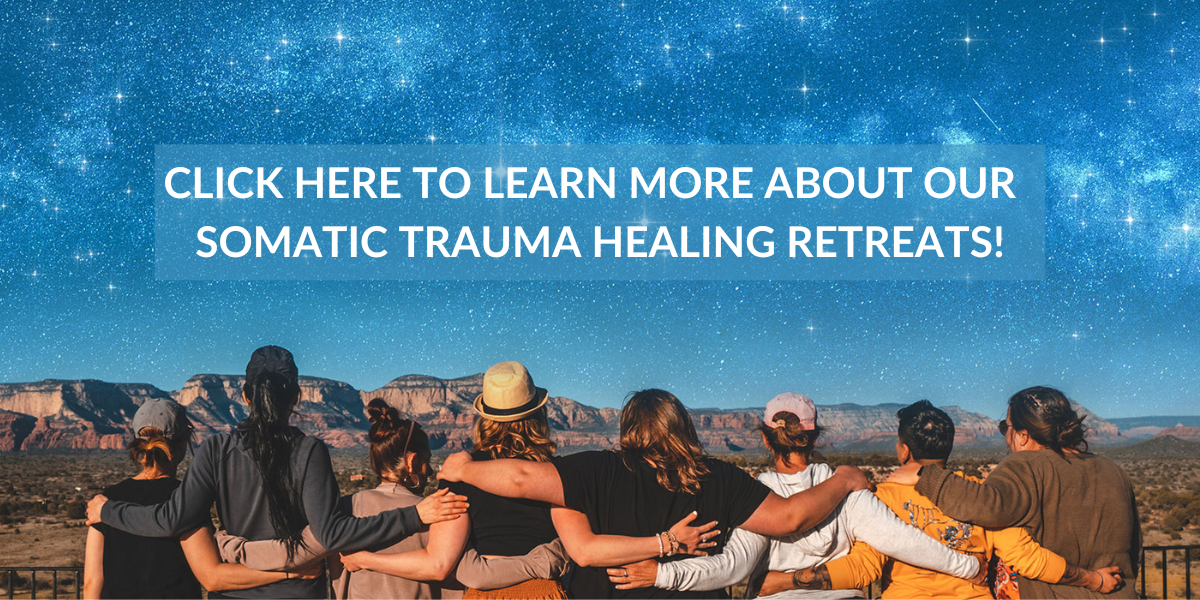
Our somatic retreats combine movement, mindfulness, nervous system regulation, embodied parts work, and meaningful connection to help you experience yourself in a new way—not just understand yourself differently.
These retreats aren't designed to help you escape yourself.
They're designed to help you come home to yourself.
Whether you're beginning your healing journey or you've spent years in therapy and personal growth, a trauma-informed spiritual retreat can be a powerful catalyst for lasting transformation.
Explore the Sedona Spiritual Retreat →