Preparing for a Somatic Therapy Retreat in Yosemite
By Orit Krug | March 9, 2026
Arriving As You Are
You do not need to arrive calm, grounded, or “ready.” You can come messy. You can come with the parts of you that feel confused, hopeful, scared, curious, or uncertain. You can bring the parts you usually hide from others. The parts you have not felt safe showing before.
All of you is welcome here. What matters most is that you arrive present with whatever is true for you in that moment and open to the experience that unfolds.
Often people discover something surprising about retreats like this: you do not always get the retreat you imagine or expect. But you often receive the retreat you truly need. This space allows your nervous system to soften enough to meet parts of yourself that may have been waiting a very long time to be seen.
What Makes a Somatic Therapy Retreat Different
Many people who attend a somatic healing retreat have already done a lot of personal growth work. They may have tried:
- Traditional talk therapy
- Self-help books
- Mindfulness practices
- Relationship coaching
- Other healing retreats
Those approaches can be incredibly valuable. But many people still feel like something hasn’t fully clicked yet. Somatic therapy focuses on how experiences live in the body, not only in thoughts or stories. When healing includes the body, people often access emotions, memories, and inner parts that were difficult to reach through conversation alone.
Retreats create the conditions for this work to unfold more naturally because you are temporarily removed from everyday stress and responsibilities. Nature, community, and intentional therapeutic support allow deeper layers of experience to surface safely.
Learn more about the main Yosemite Women's Somatic Therapy Retreat to understand the full experience and schedule.
What a Typical Day Feels Like
Morning: Moving Slowly and Listening to Yourself
The day begins gently. Wake up slowly, have breakfast, and simply spend time being with yourself. There is no agenda, no pressure to journal, move, or figure anything out. The invitation is simply to:
- Nourish your body
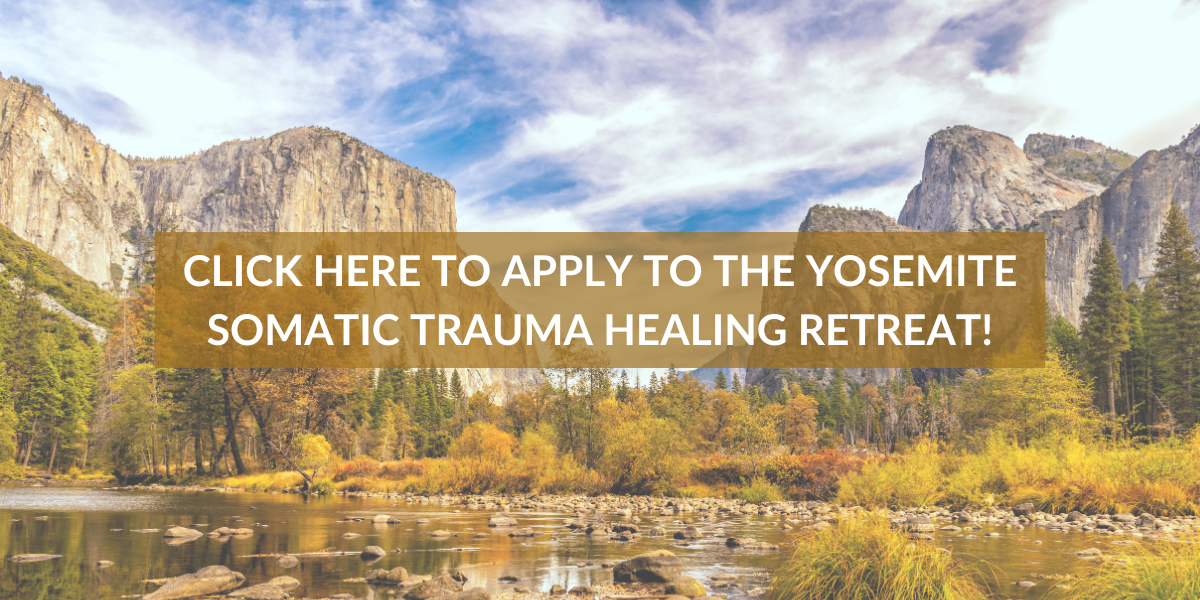
- Take in the beauty of Yosemite Valley
- Notice what you feel
- Allow your nervous system to settle naturally
Later in the morning, we gather for a somatic therapy–integrated hike in Yosemite Park. Being in nature often makes it easier for the body to relax and become more present. Movement and sensory awareness help participants notice subtle emotions and sensations that may otherwise stay hidden during everyday life.
Afternoon: Accessing the Parts That Have Been Waiting
The afternoon is spent back at the retreat home. We begin with lunch and spacious time to rest.
You can nap, sit outside, receive a massage, or simply enjoy quiet time.
Later, the group gathers for a guided somatic therapy session.
This is where deeper therapeutic work often unfolds.
Through intentionally guided somatic experiences, you can begin to access parts of yourself that have not received attention or care for many years.
Sometimes these parts developed early in life when emotional needs were not fully met. Other times they formed later through difficult relationships or life experiences.
Very often, people realize these parts have also been neglected by their own self-criticism or survival strategies.
During the session, you’re gently guided to be and move with these parts. Movement often feels like a huge sigh of relief—creating space for what’s been held inside. As these parts are seen, loved, and acknowledged, the inner struggle softens.
You begin to feel a sense of wholeness, compassion, and acceptance arise from within. Letting go of tension while exploring new ways to inhabit your body creates a freedom many people with trauma have been searching for for years.
Melanie, who attended the Spain Retreat in September 2025, arrived carrying a long-standing fear of being forgotten. She held a tightness in her chest that never fully left. At first, she was hesitant to allow herself to feel, worried that the emotions would be overwhelming. But as the session unfolded, she was guided to move with her younger, anxious parts—stretching, swaying, and even laughing through some of the tension. Melanie described it as a physical exhale, as if her body could finally release what had been stuck for decades. By the end, she felt a deep sense of security in her own presence.
Returning home, she noticed she could be more vulnerable with loved ones, and she finally experienced trust and intimacy in ways she had previously thought impossible. Her body remembered the safety and freedom she had felt on retreat long after the weekend ended.
Through the body, you begin to feel, meet, and reconnect with these unseen parts.
Instead of pushing them away or analyzing them, the process allows these parts to finally experience something many have been longing for:
- Presence
- Compassion
- Acceptance
As these parts begin to feel seen and loved, something shifts internally. The struggle inside softens. You feel more whole, more connected, and more alive.
Evening: Integration Through Rest and Connection
Evenings are intentionally spacious. You can “put your feet up” and relax as our personal chef cooks dinner for us, followed by unstructured time.
Some people relax quietly. Others talk with new friends. Some take walks under the stars or simply enjoy the quiet of the mountains.
These moments of natural connection and shared humanity often become one of the most meaningful parts of the retreat experience.
The Power of Healing in Community
One of the most surprising aspects of retreats is how quickly deep connections form.
Many participants arrive feeling unsure about being vulnerable around people they have just met. Yet something powerful happens when a group of people gathers with shared intention for healing and growth.
Participants often experience a level of acceptance and non-judgment that feels rare in everyday life. Over the course of the retreat, people frequently form bonds that feel incredibly meaningful. Many describe the group as becoming one of the safest spaces they have ever experienced.
This kind of connection can restore something many people did not even realize they had lost:
Faith in love.
Faith in belonging.
Faith in their own worth.
Why the Experience Lasts After the Retreat
Many people wonder whether retreat experiences fade once they return home. Because the work happens through the body, it tends to stay in the body rather than just as an idea. You may notice:
- Different, calmer responses to stress
- Emotions that feel more manageable
- A stronger connection to yourself and others
Take Bev, who attended the Zion Retreat in February 2025. Before retreat, she felt frozen and disconnected from her body, even though she had plenty of head knowledge about her emotions.
During the somatic parts-work, Bev was guided to connect with her younger self, the part that had been operating from fear for years.
At first, being vulnerable felt scary—but the structured exercises, eye contact, and mirroring helped her feel deeply seen. By the end, she described feeling lighter in her body, more present, and able to respond to life rather than reacting out of old patterns.
Back home, Bev noticed subtle but powerful changes: she could hold herself in moments of stress with more ease, her relationships felt more balanced, and friends commented on a new confidence and grounded energy in her presence.
Friends and family often notice these subtle shifts too—how you carry yourself, how your energy feels softer, more confident, more present. The somatic work you do on retreat stays with you, gradually transforming your daily life in ways you might not even realize at first.
Ongoing Support After the Retreat
The retreat experience does not end when everyone leaves Yosemite!
We remain connected through a shared group space where we can continue supporting one another as you integrate what you experienced.
However, the most important part of post-retreat integration is not the group chat. It is the deep embodied experience of acceptance and connection that you carry home with you. When you experience being fully seen and welcomed by others, it can shift how you relate to yourself and others, long after the retreat ends.
The somatic work we do is so profound that new patterns and ways of being continue to integrate for at least 3–6 months after returning home.
Frequently Asked Questions
How intense is the retreat?
The process is always guided gradually and carefully.
You will not be pushed beyond what feels safe for your nervous system.
The pace is continually adjusted based on each person’s comfort level.
If you reach your limit, the process can pause immediately, continuing slowly and gently if you choose. This avoids overwhelm or shutdown that can sometimes happen when therapeutic trauma work moves too quickly.
Do I need prior therapy experience?
No. Some participants have years of therapy experience, while others are exploring this kind of work for the first time.
The retreat environment supports you wherever you are in your healing journey.
Who is this retreat for?
This retreat is designed as a women’s trauma healing retreat and welcomes adults from many different backgrounds and life experiences.
Participants may include women of different cultural identities, gender expressions, ages, neurotypes, and physical abilities. The intention is to create a space where you can show up authentically and feel respected and supported as you are.
Do I need to be physically fit for the hikes?
No. The hikes are designed to be gentle and accessible. You are always encouraged to move at your own pace and listen to your body.
Final Thoughts
Healing rarely happens through forcing yourself to change.
More often, it begins when we slow down enough to truly listen to what our bodies and inner parts have been trying to tell us.
Retreat spaces like this offer the time, safety, and support for that listening to finally happen.
When you begin reconnecting with yourself in that way, something remarkable often unfolds. You stop feeling quite so stuck. And you start feeling a little more like yourself again.
Step Into Transformation
Check out our Yosemite Somatic Therapy Retreat!
We carefully consider each person who applies, because this retreat is about creating a space where you can truly show up and feel safe. We want to make sure you’re ready for the somatic work, feel supported by the group, and are aligned with the energy and vibe of everyone attending.
When you join, you’ll be surrounded by women who are open, curious, and committed to their own growth — so you can take the time and space to explore, feel, and transform without worry.
This retreat offers a rare opportunity to slow down, attune, and reconnect deeply with your body, your inner self, and a supportive community, creating transformations that last long after you return home.
Please apply here to be considered!
External resources for context and credibility: Psychology Today - Trauma, Healthline - Somatic Therapy, NAMI - Trauma